
ASEAN+3 Fiscal Policy Report 2026

April 2026

Strengthening Fiscal Management Amid Emerging Headwinds

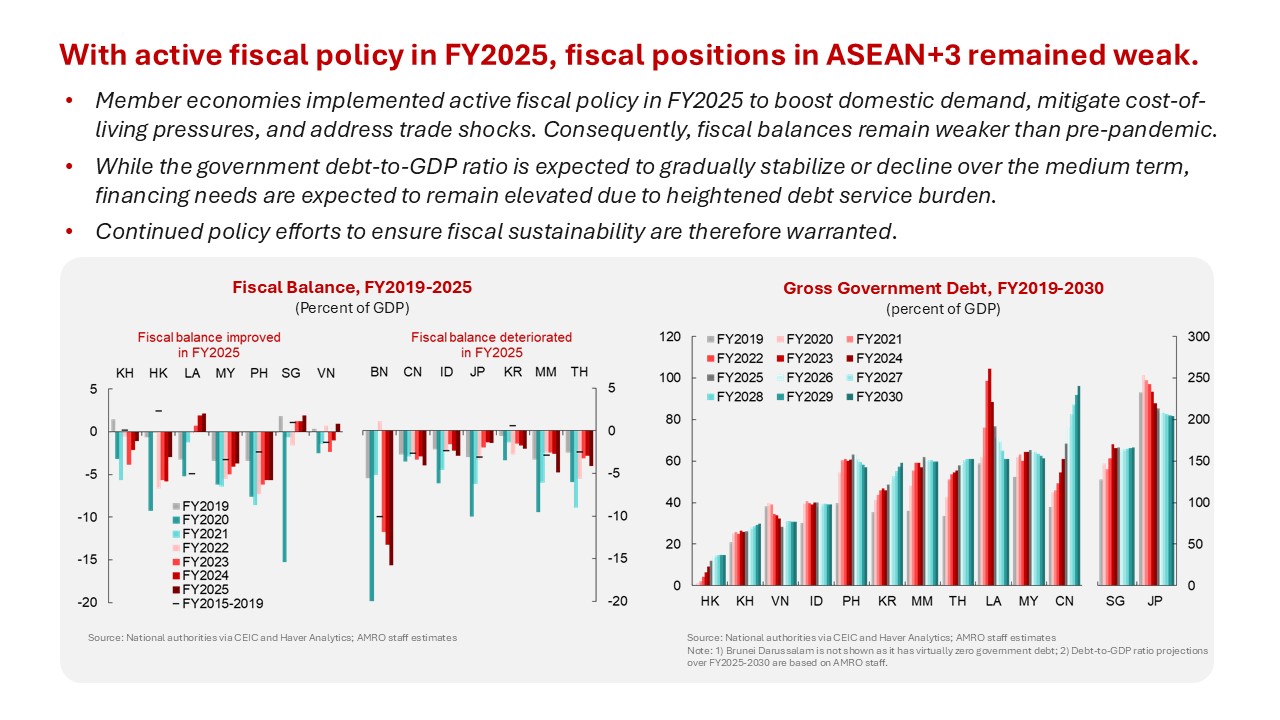
Since the release of the ASEAN+3 Fiscal Policy Report (AFPR) 2025 in April last year, fiscal developments in ASEAN+3 economies have reflected active fiscal policy, characterized primarily by expanded spending to boost domestic demand, mitigate cost-of-living pressures, and address trade shocks.

The ASEAN+3 Fiscal Policy Report (AFPR) 2026 (AFPR 2026) provides a comprehensive assessment of recent fiscal developments and the fiscal outlook for 2026 across ASEAN+3 economies. It also provides an in-depth analysis of key challenges and outlines policy directions to strengthen fiscal management amid mounting structural headwinds, while remaining flexible to respond to emerging shocks.


Download Full Report Read the Press Release

Recent Fiscal Developments and Outlook

While fiscal outcomes in 2025 varied across member economies—with half improving and the other half deteriorating—they remained generally weaker than pre-pandemic levels. Government debt increased again in 2025, following earlier signs of stabilization, while financing needs remained elevated due to principal and interest payments on accumulated debt.

Policy Discussion

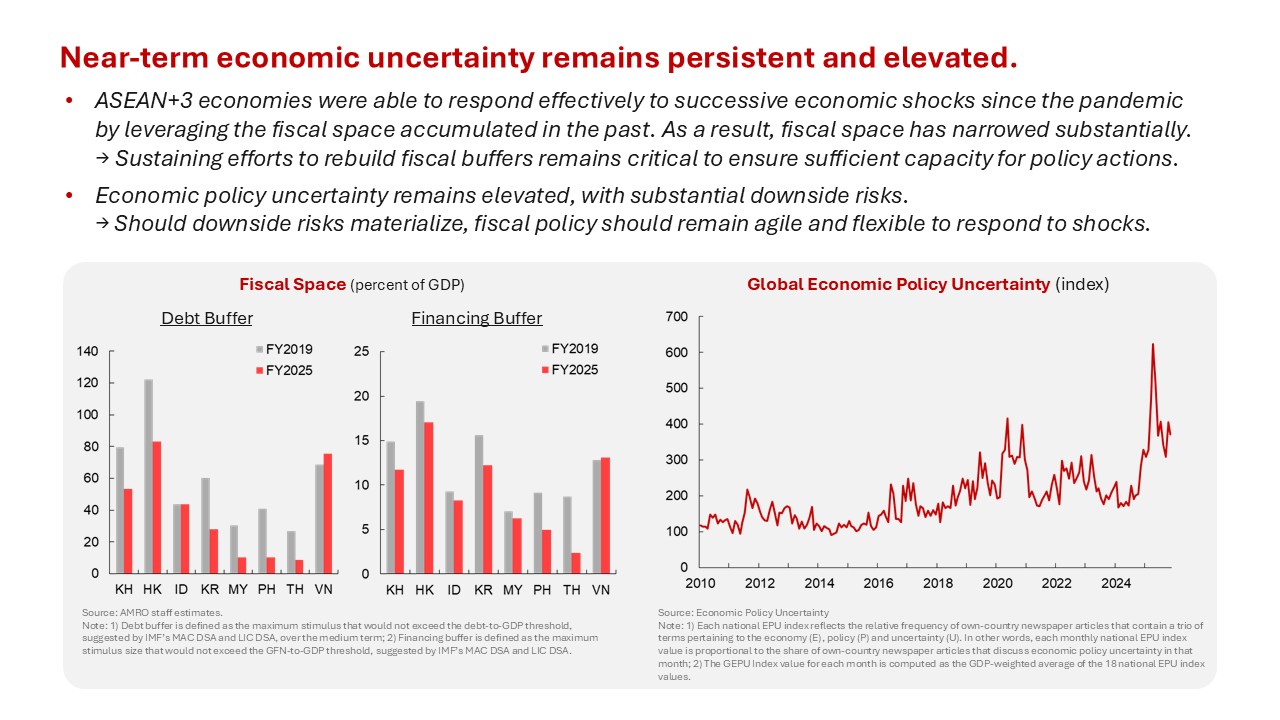
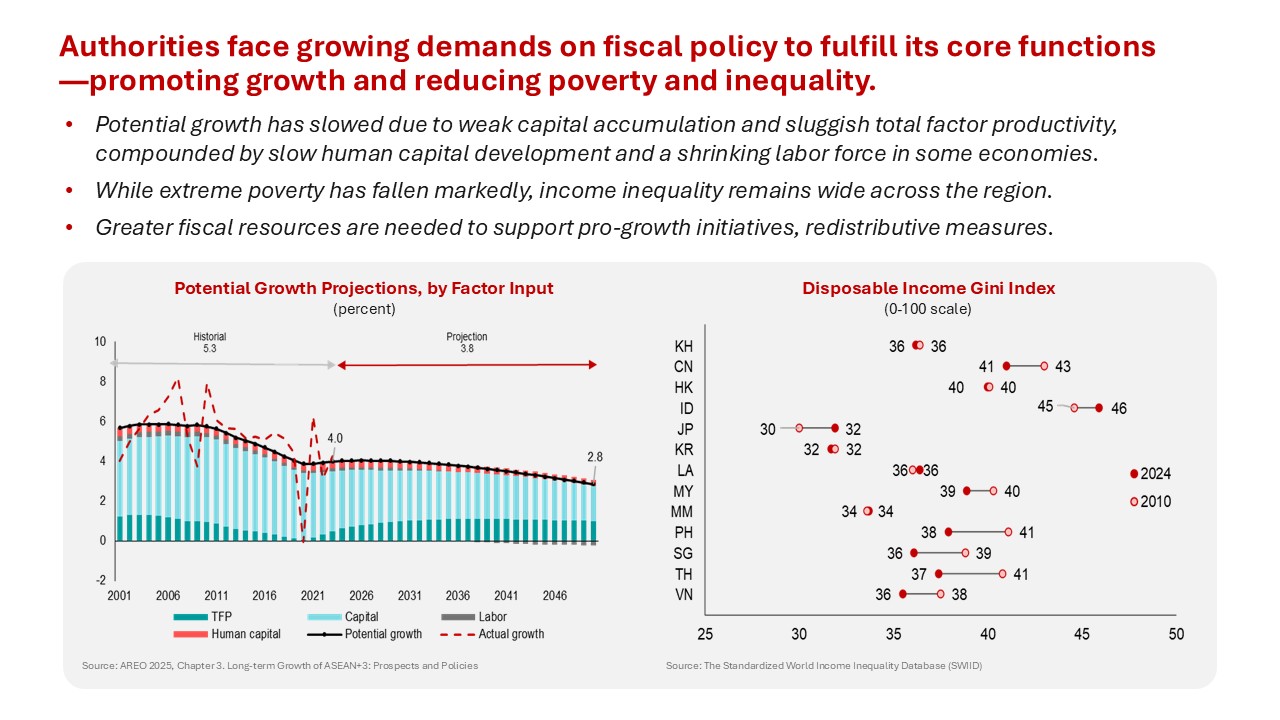
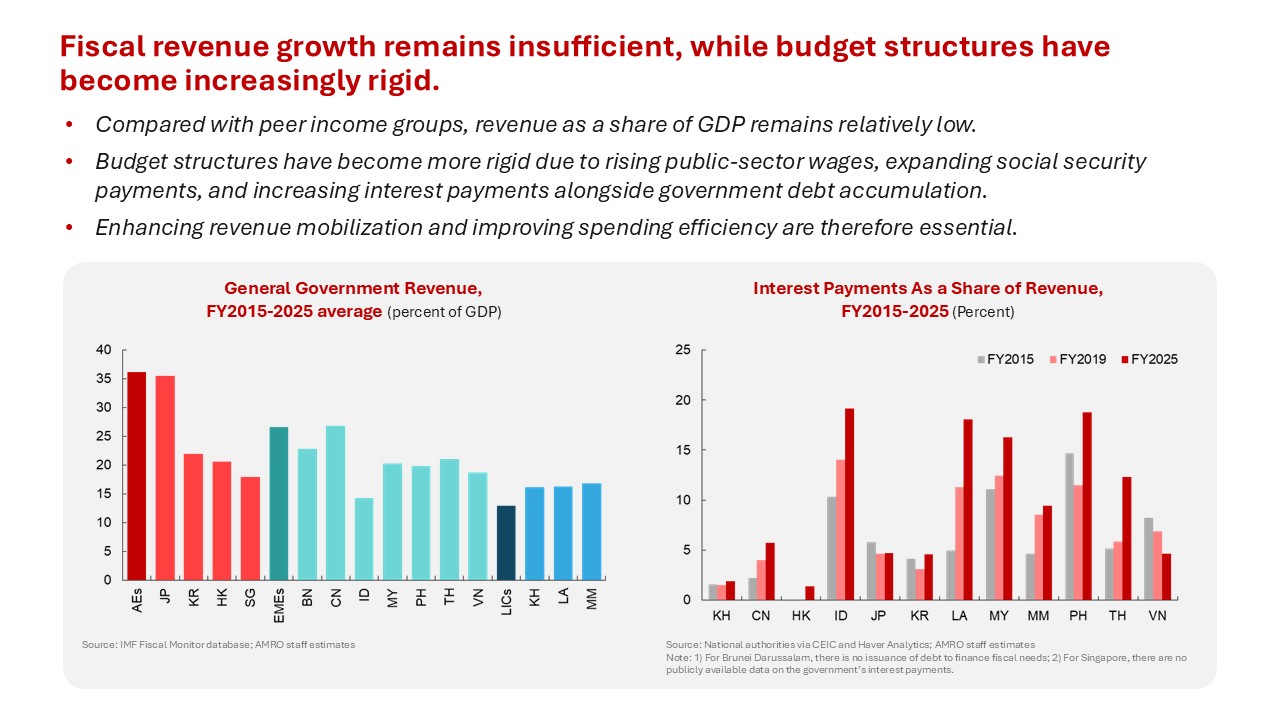
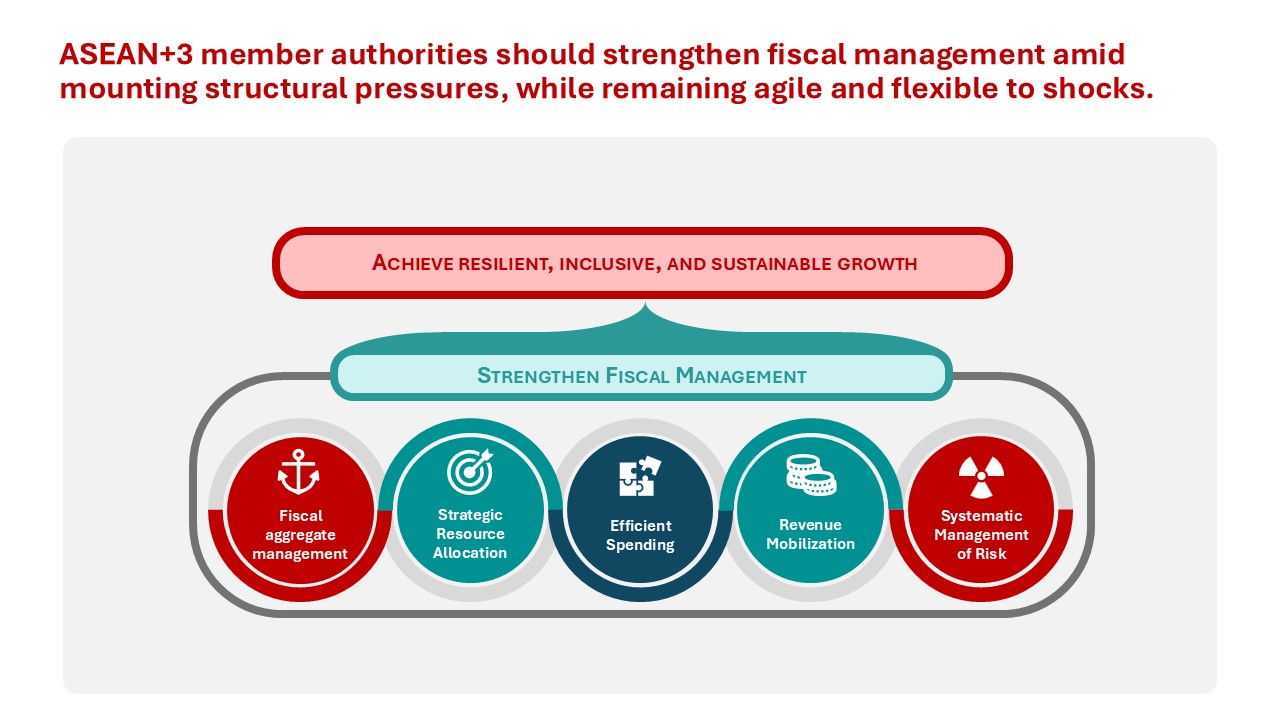
With fiscal positions weakened and fiscal space narrowed, continued efforts to safeguard fiscal sustainability and rebuild buffers are warranted. At the same time, authorities face growing demands on fiscal policy—not only to respond to near-term shocks, but also to support growth, facilitate structural transformation, and reduce poverty and inequality over the medium to long term, despite limited revenue buoyancy and rigid budget structures.

To address these challenges, ASEAN+3 economies are encouraged to strengthen fiscal management across key areas, including risk management, fiscal aggregate management, strategic resource allocation, spending efficiency, and revenue mobilization.

Videos

Download by Section

Previous Editions

ASEAN+3 Fiscal Policy Report 2025

Read