Making Tax Incentives Work Better in ASEAN+3
May 29, 2026
To maximize benefits and contain costs, tax incentives should be anchored in three key pillars: design, management, and governance.
May 29, 2026
To maximize benefits and contain costs, tax incentives should be anchored in three key pillars: design, management, and governance.
September 29, 2025
Seung Hyun (Luke) Hong, Yasuto Watanabe
Meaningful domestic revenue reform requires more than technical fixes. Policymakers will need to rationalize tax incentives, strengthen administrative capacity, and bring informal sectors into the formal tax system.
February 7, 2024
The global tax reform, scheduled for implementation in 2024, aims to reduce tax competition between countries and discourage multinational enterprises (MNEs) from engaging in profit shifting for tax avoidance.
January 26, 2024
This note provides an update on the significant progress made and discusses the challenges faced by the ASEAN+3 member economies, the United States, and Europe.
January 10, 2022
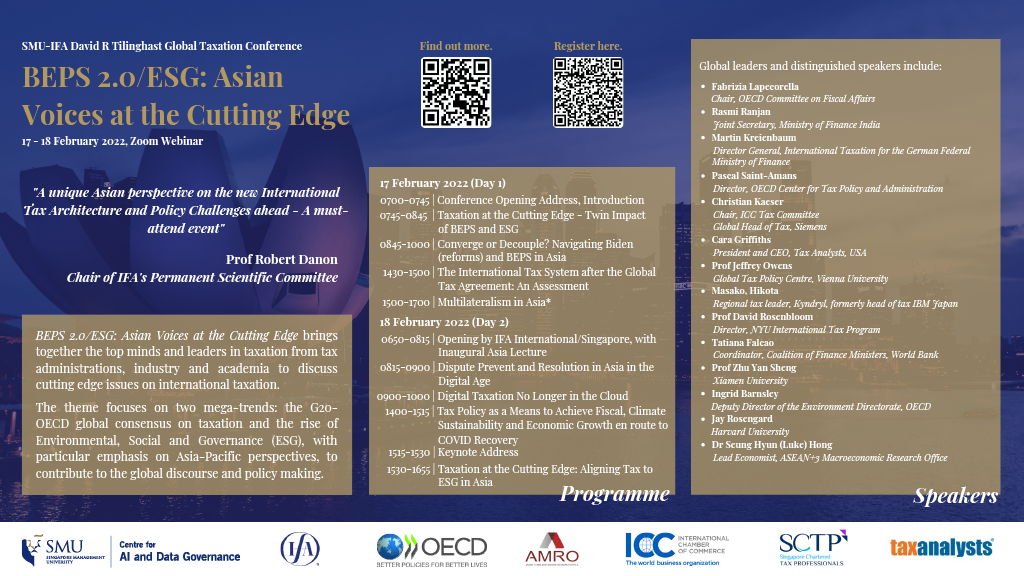
The SMU Law School Centre for AI and Data Governance and IFA are proud to present the SMU-IFA David R Tillinghast Global Digital Taxation Webinar on February 17-18, 2022.
November 8, 2021
Singapore’s economy is expected to recover strongly on the back of effective containment measures, accelerated vaccination rollout, and extended policy support.
November 1, 2021
On October 8, 2021, 136 economies agreed to the new framework for international tax and its accompanying detailed implementation plan.
October 26, 2021
Andriansyah, Byunghoon Nam, Seung Hyun (Luke) Hong
Many countries are facing two potentially conflicting policy priorities – supporting economic recovery and rebuilding policy space – in the post-pandemic period.
September 28, 2021
Large fiscal spending during the pandemic period has amplified the urgency to reduce tax leakages arising from profit shifting practices by multinational enterprises.
June 4, 2020
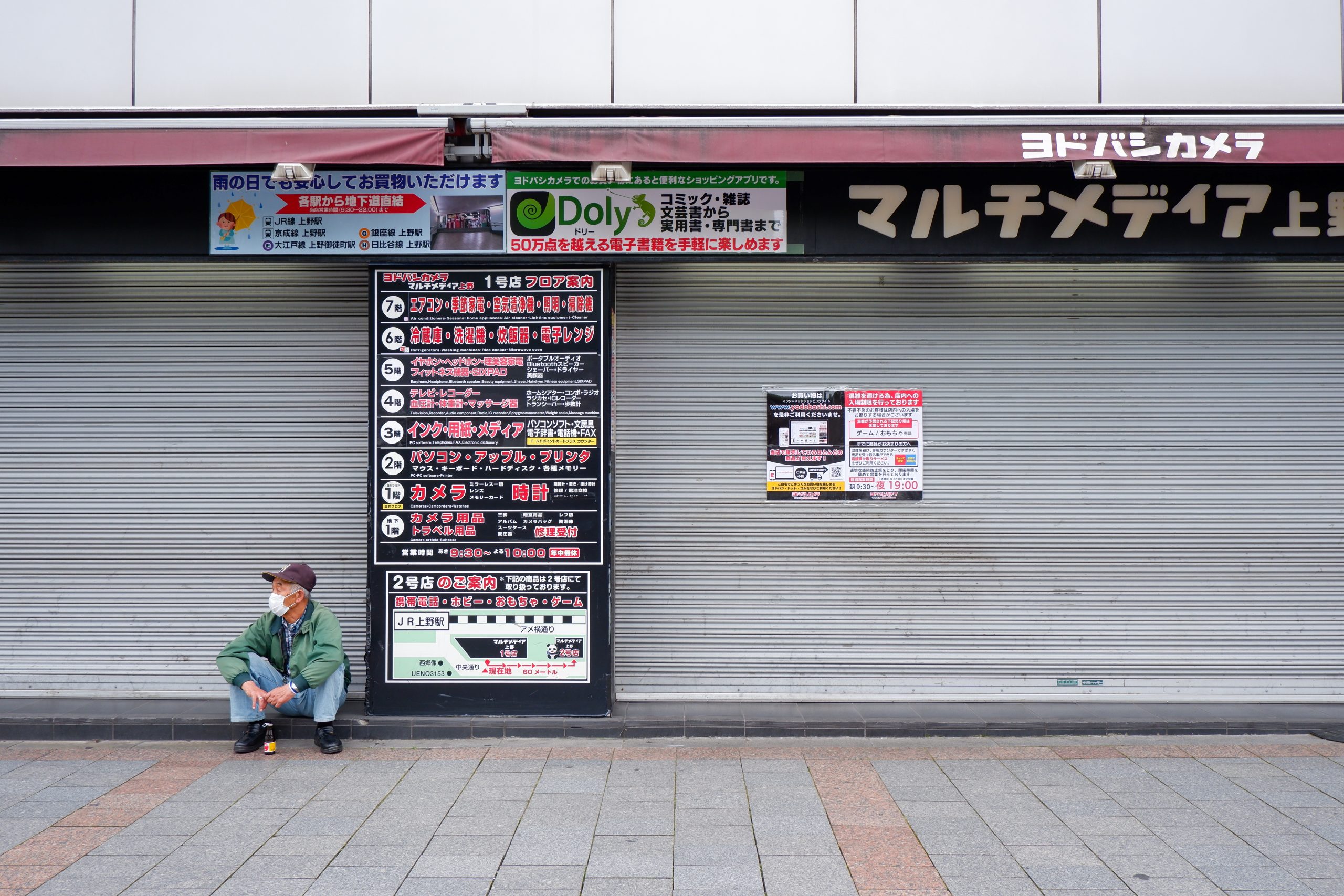
After being postponed in 2015 and 2017, Japan’s consumption tax was finally raised from eight to ten percent in October 2019. Most food items are exempted.