

SINGAPORE, July 31, 2026 – The Singapore economy has weathered recent global trade and energy shocks well, mainly supported by a carefully calibrated mix of fiscal and monetary policies. Looking ahead, addressing structural challenges and advancing regional integration—particularly as ASEAN Chair in 2027—will strengthen Singapore’s medium-term economic resilience.
This preliminary assessment follows AMRO’s Annual Consultation Visit to Singapore from June 8 to July 30, 2026. The mission team was led by Lead Economist Runchana Pongsaparn, with AMRO Director/CEO Yasuto Watanabe and Chief Economist Dong He participating in key policy meetings.
Economic developments and outlook
“Singapore’s exports and investment continue to benefit from strong global demand for AI-related products,” said Pongsaparn. “However, higher global oil prices, and slower global demand stemming from the Middle East conflict are expected to weigh on growth. With strong growth performance in the first half of 2026, Singapore’s growth is projected to moderate slightly from 5.0 percent in 2025 to 4.8 percent in 2026.”
Inflation is expected to rise from 0.9 percent in 2025 to 2.1 percent this year, driven by higher global energy and commodity prices following the Middle East conflict. Underlying inflationary pressures remain broadly contained, supported by the stronger Singapore dollar and targeted subsidies.
Singapore’s external position remains robust, and the financial sector remains sound, supported by strong asset quality, ample capital and liquidity buffers, and solid profitability.
AMRO projects the fiscal balance to be 2.1 percent of GDP in FY2025 and 1.1 percent in FY2026, providing room to further cushion potential shocks. While the Monetary Authority of Singapore (MAS) tightened monetary policy in April and July 2026, domestic interest rates have remained broadly stable, contributing to accommodative financial conditions.
Risks, vulnerabilities, and challenges
Despite uncertainties in the Middle East, the balance of risks to the near-term outlook is assessed to be broadly balanced. Renewed escalation of the Middle East conflict remains the most salient downside risk, potentially raising inflation while weighing on growth through weaker global demand. Meanwhile, the sustainability of AI-led semiconductor demand and trade policy developments present two-sided risks. Stronger AI-related investment and tariff de-escalation could lift growth, while weaker-than-expected AI demand or renewed trade restrictions would weigh on Singapore’s growth prospects.
At the same time, structural challenges—such as geoeconomic fragmentation, population aging, energy sustainability pressures, and uneven AI adoption—could weigh on long-term growth and competitiveness, underscoring the need to accelerate structural reforms.
Policy recommendations
Singapore’s response to the oil price shock has been anchored in a multi-pronged and whole-of-government approach under the Homefront Crisis Ministerial Committee. This approach combines targeted and temporary fiscal support with measures to strengthen energy and supply chain resilience over the medium term. Monetary policy has complemented these efforts through a calibrated and data-dependent approach, helping to contain inflationary pressures. Overall, the macroeconomic policy mix remains appropriate amid continued elevated uncertainty.
Looking ahead, strengthening competitiveness and potential growth will require continued efforts to facilitate AI adoption and strengthen workforce transformation. Singapore is well positioned to become a trusted AI hub, serving both as a new engine of growth and a catalyst for durable productivity gains. The emphasis on AI adoption in the Economic Strategy Review (ESR), supported by the National AI Strategy is welcome. Going forward, implementation should prioritize broader technology diffusion across firms, especially SMEs, alongside workforce reskilling and upskilling, and support for career transitions.
As the ASEAN Chair in 2027, Singapore is well placed to advance regional integration. Its strong regulatory regime and strength in financial innovation reinforce its role as a regional financial hub. Further progress in cross-border payment connectivity, digital finance, green and transition finance, and financial infrastructure innovation would help deepen regional financial integration. Singapore can also play a catalytic role in strengthening ASEAN’s energy security by supporting cross-border electricity trade, mobilizing financing, and facilitating regional coordination for the ASEAN Power Grid.
The AMRO team appreciates the Singapore authorities and participating organizations for their cooperation and candid engagement during the mission.
About AMRO
AMRO is an international organization established to support macroeconomic resilience and financial stability in the ASEAN+3 region, comprising members of the Association of Southeast Asian Nations (ASEAN) and China; Hong Kong, China; Japan; and Korea. AMRO’s mandate is to conduct macroeconomic surveillance, support regional financial arrangements, and provide technical assistance to members. AMRO also serves as a regional knowledge hub and provides support to ASEAN+3 financial cooperation.
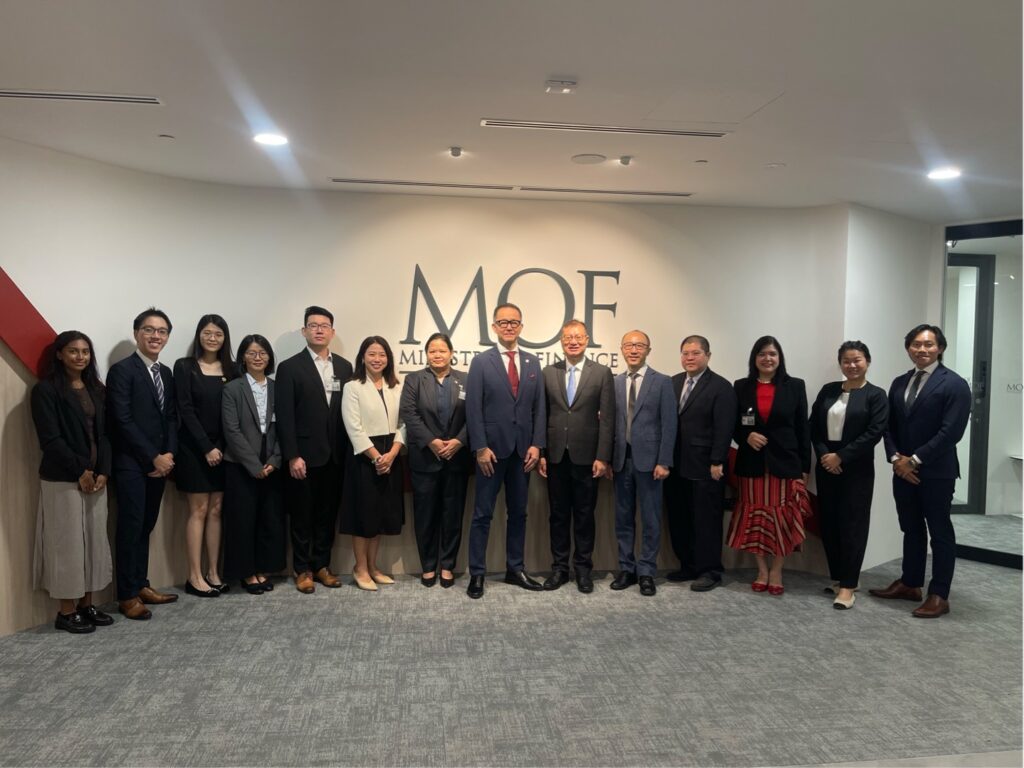
AMRO Director/CEO Yasuto Watanabe, Chief Economist Dong He, and the mission team met with Deputy Secretary Kevin Shum and other officials from Singapore’s Ministry of Finance.
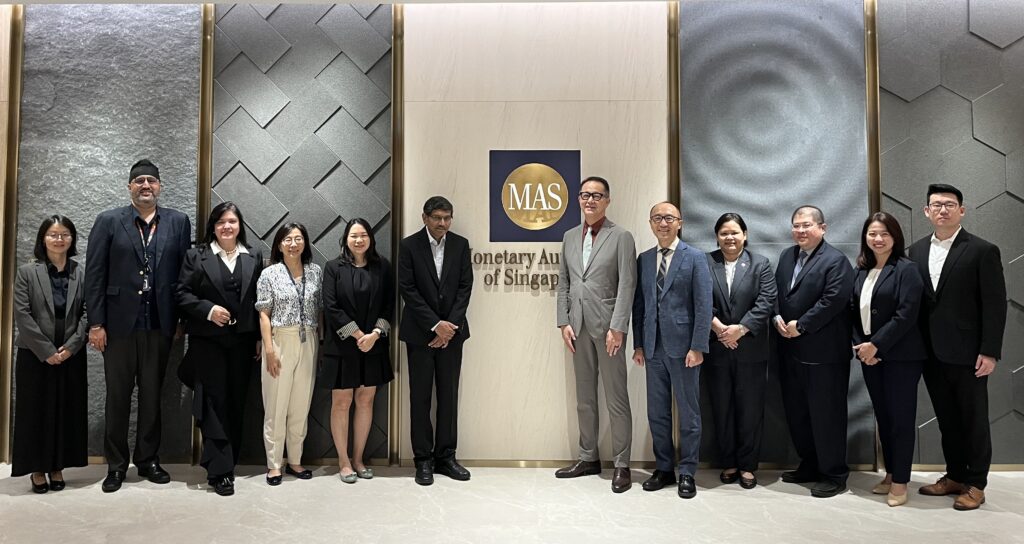
AMRO Director/CEO Yasuto Watanabe, Chief Economist Dong He, and the mission team met with Deputy Managing Director Edward Robinson and other officials from the Monetary Authority of Singapore.